What are congenital deformities of spine?
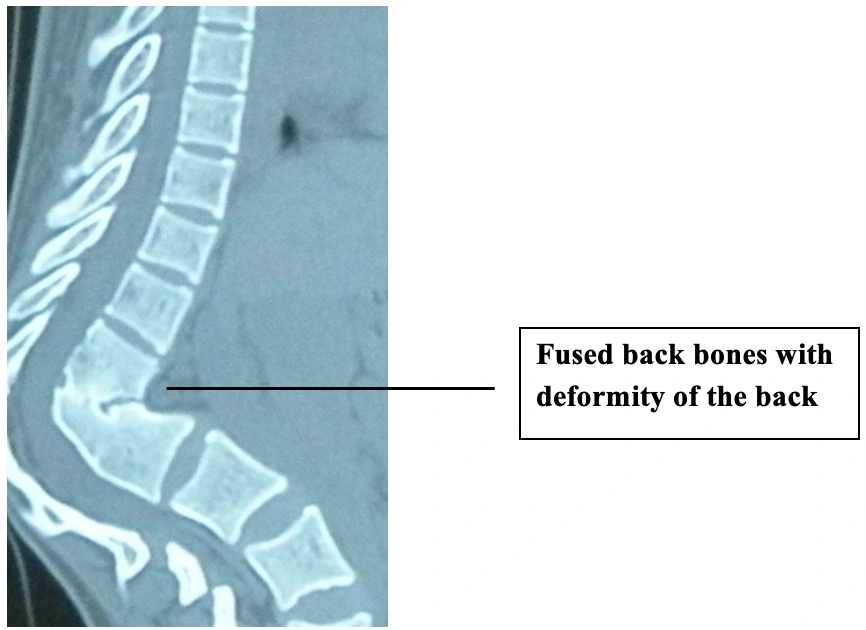
These are the disorders of spine that develop in a child before birth, due to faulty development of vertebrae which results in deformity of the back.
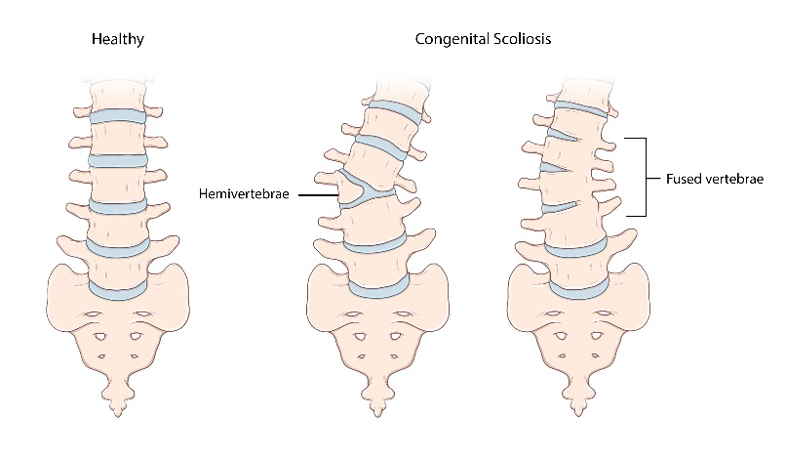
There can be various anomalies in vertebrae such as
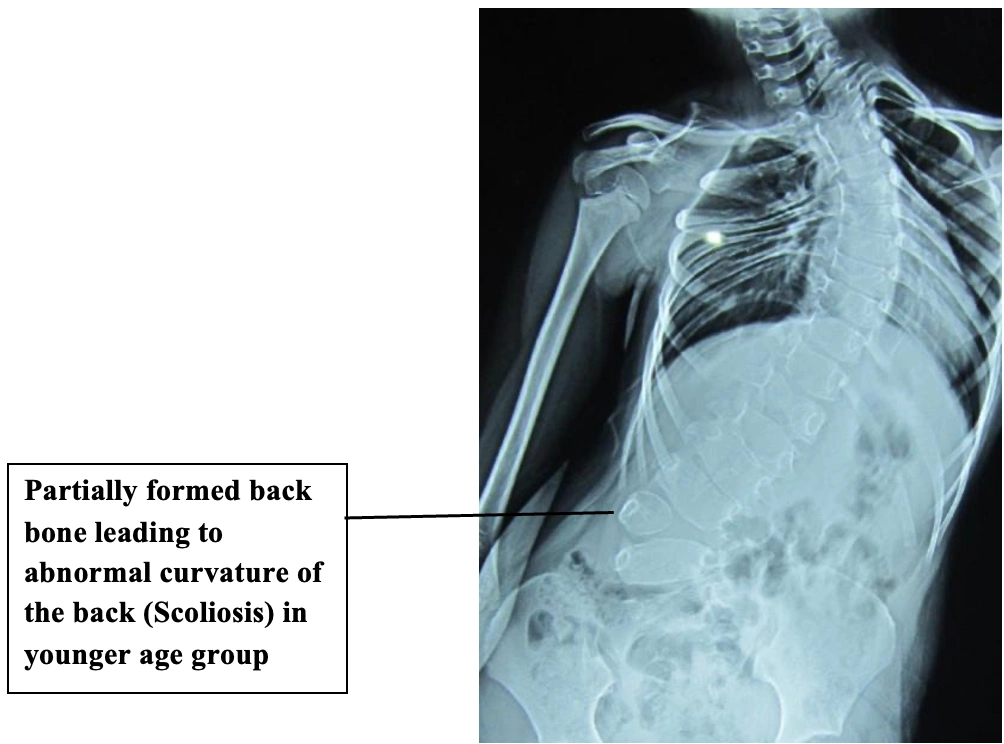
It can be partially formed
It can have 1-2 missing vertebrae
Half formed Bone
What are the causes?
Idiopathic (Unknown)
Genetic mutations
Acquired causes: Toxins, Use of certain medications during pregnancy
What are the presenting symptoms?
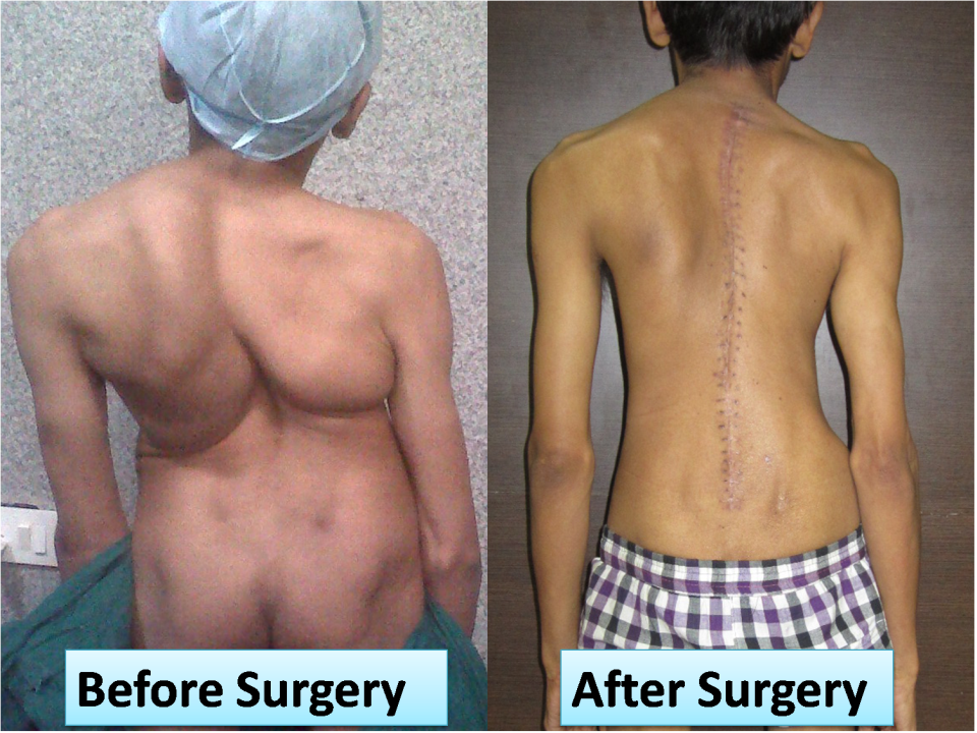
Deformities: ranging from mild to severe
Severe untreated cases can result in:
Reduced space for vital organs like heart, Lungs, stomach resulting in difficulty in breathing.
Difficulty in walking.
Myelopathy- changes in spinal cord causing weakness.
Paralysis of the limbs.
What are the types?
What could be the possible outcome of deformities of back?
Imbalance in growth of spine which carries risk of progression during the skeletal growth.
Curve might remain constant or very slow progression-can be managed with just observation and regular X-ray and clinical monitoring.
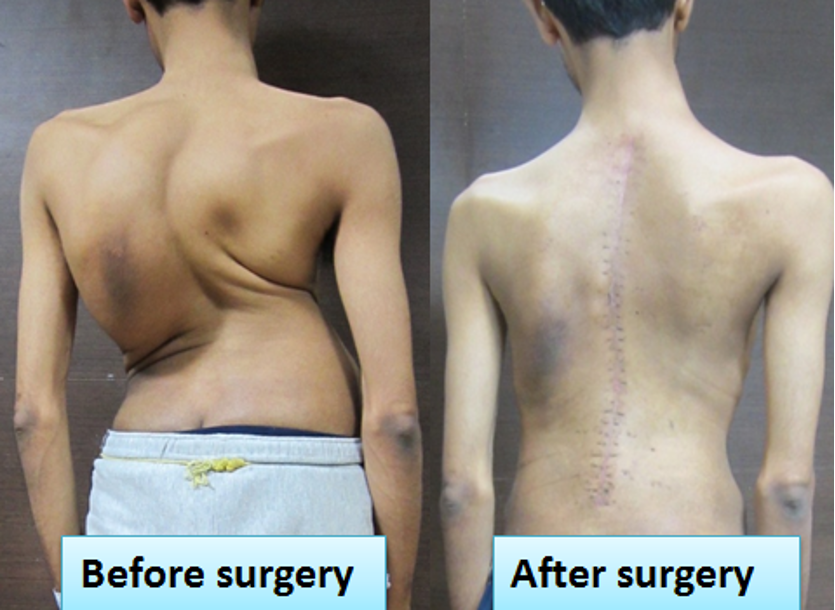
Rapid progression of curve: requires surgical correction to prevent possible complication.
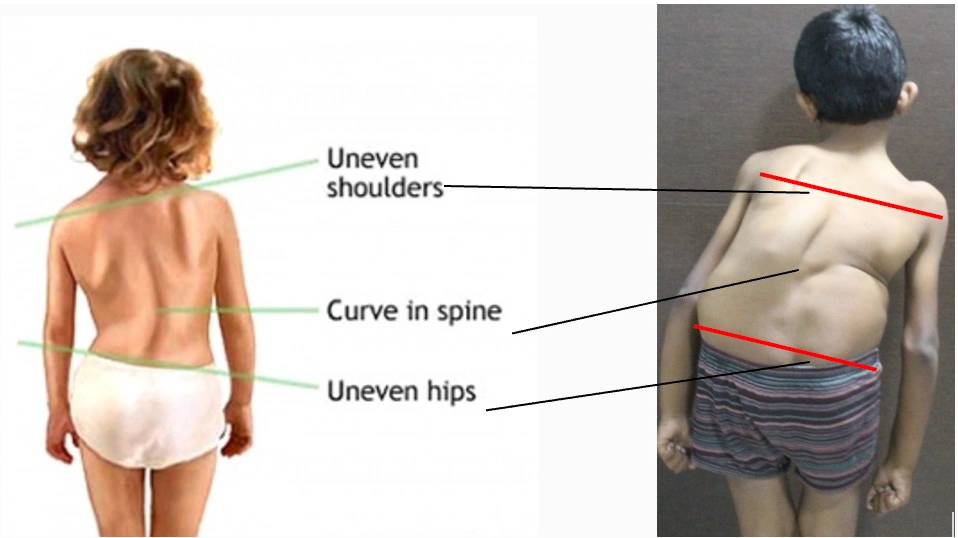
What are the signs of congenital deformities of spine?
Uneven Hips
Uneven shoulders, hips, waist, legs
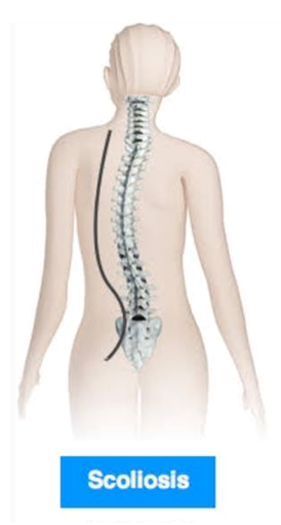
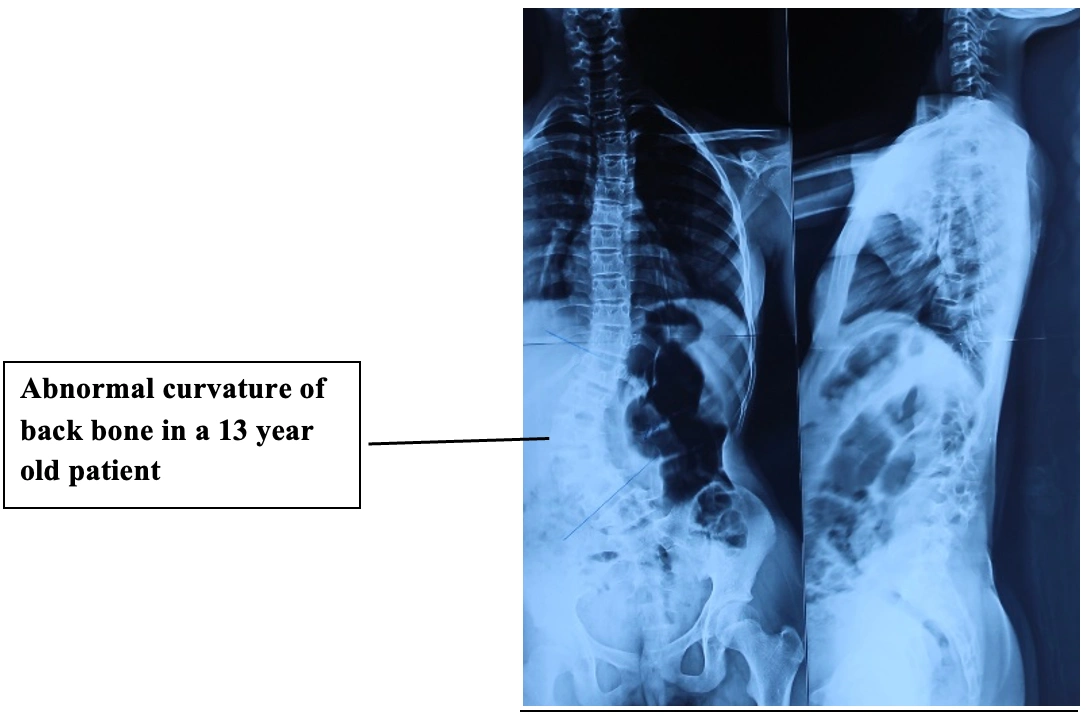
Abnormal curvature in the spine
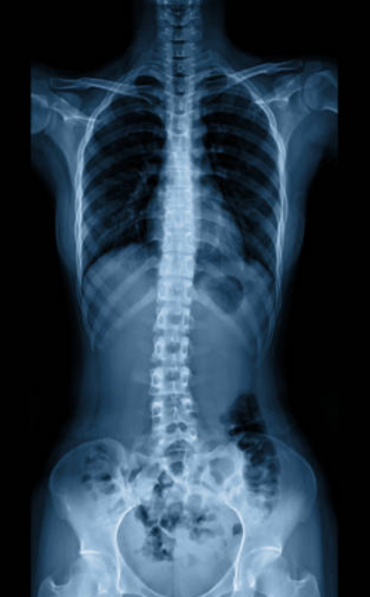
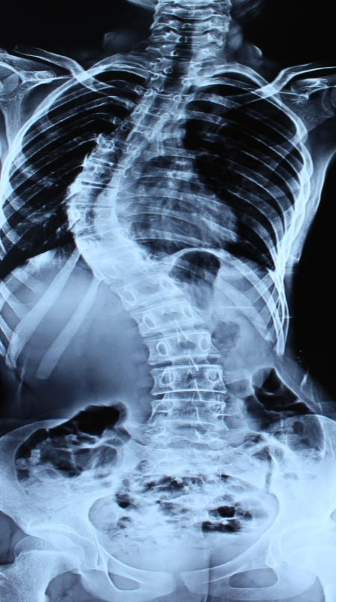
How to diagnose congenital deformities of spine? X-ray: Basic investigation to assess the bony anatomy and the deformity of the spine. Normal whole spine X-rayX-ray of Curved Spine/ Scoliosis
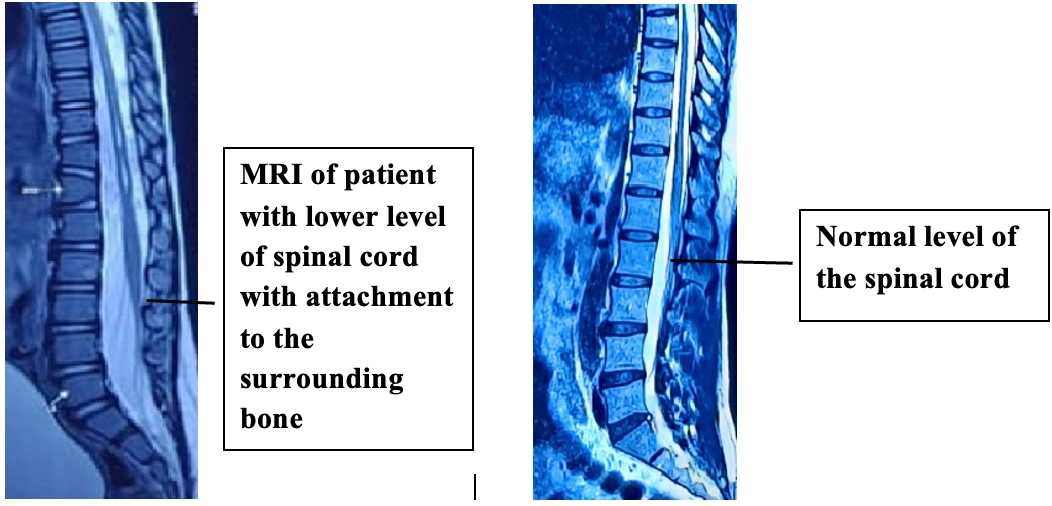
MRI: Used for assessment of associated abnormality in the Spinal Cord.
CT scan: done for detailed assessment of structure of bony abnormalities,
TREATMENT:
Regular monitoring, observation by serial X-rays and Clinical assessment. Use of braces: Role of braces is minimal in scoliosis. Even if it is used it has to be customized for individual patient.
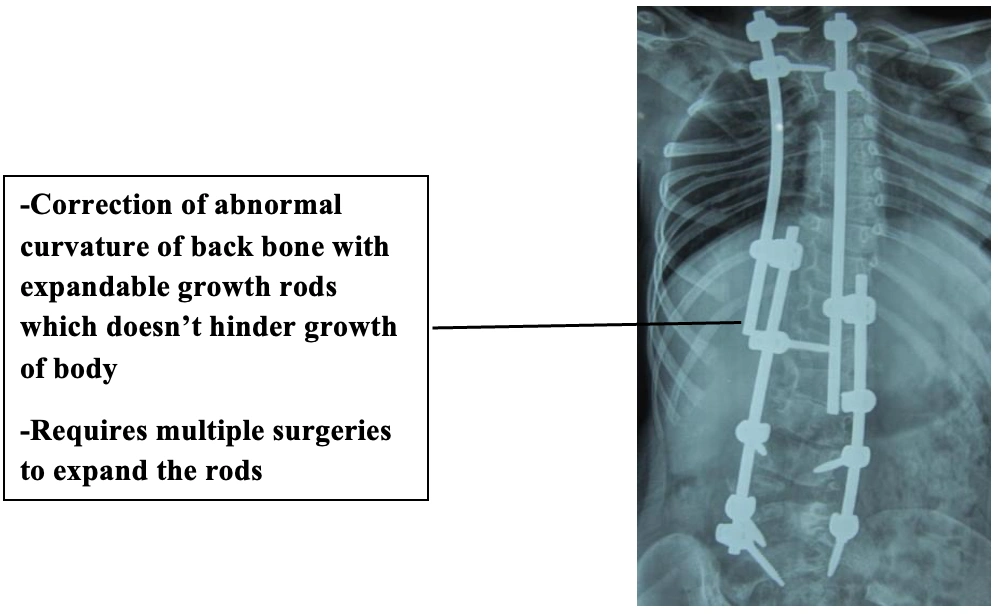
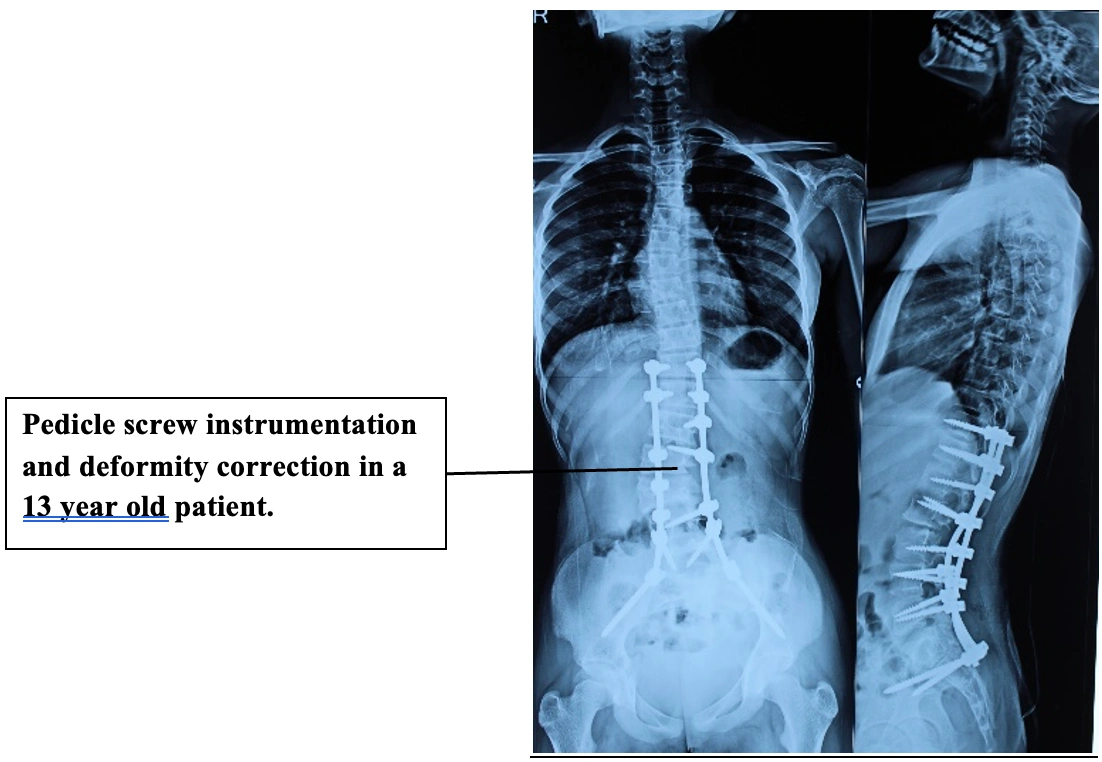
Surgical options: Growing Rod Surgery: Growing rod surgery is one of the options for the correction of scoliosis, a modern alternative treatment for young children with early onset scoliosis.
The incidence of complication remained relatively low and is also recommended for patients where the primary problem is at the vertebral column.
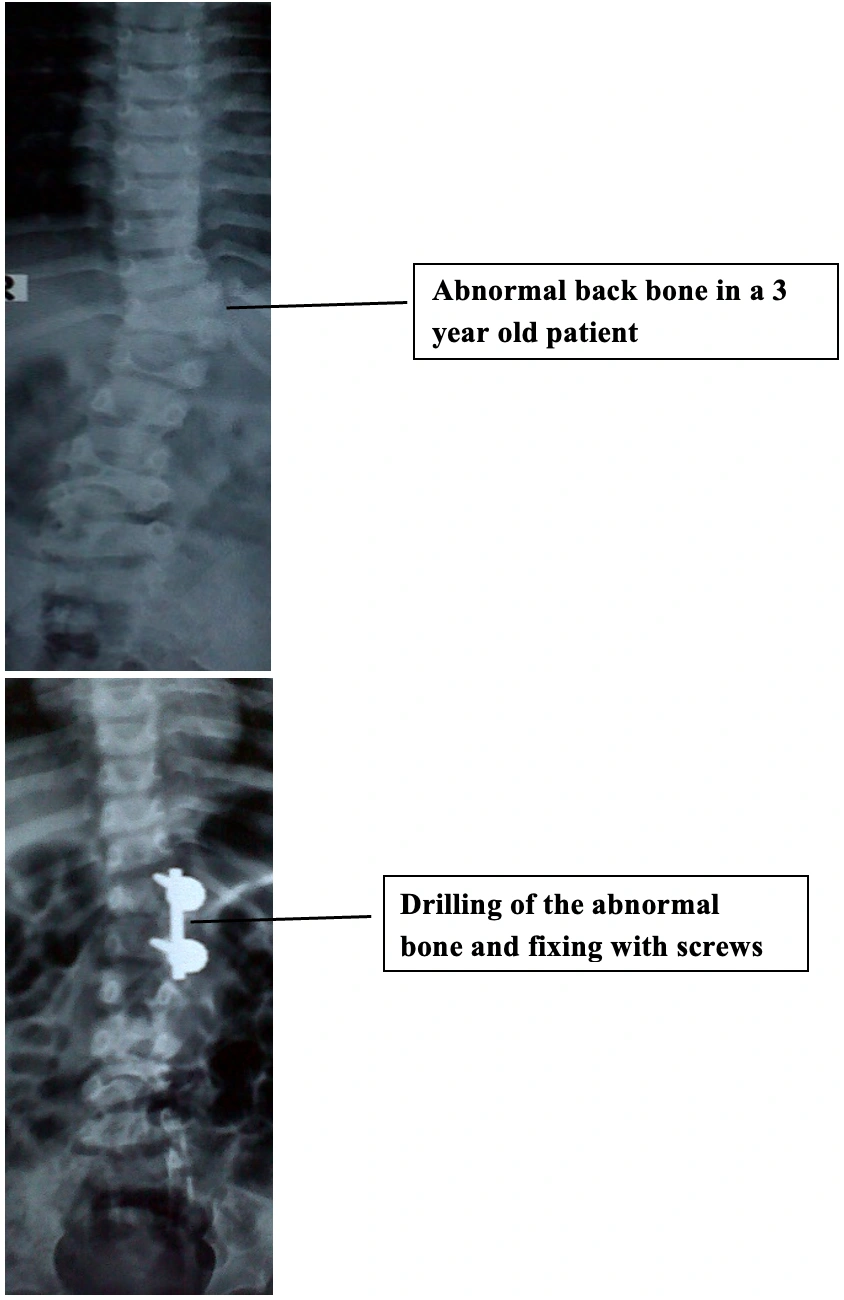
Resection and Fusion: Removal/ drilling of partially formed bone and fusing by putting screws to only one side of the back with minimal number of screws.
This surgery is typically prescribed as a treatment for children with congenital scoliosis.
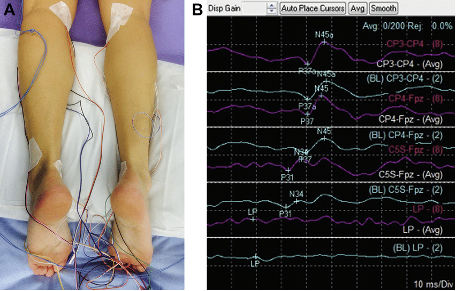
Risk of weakness of the limbs is decreased on usage of
Intra operative neuromonitoring-nerve signals
are assessed during the surgery to assess
if the spinal cord and spinal nerves are working.
Normal course of Post-operative Events: Day 0/ Day 1- Mobilization with support. Day 2- Dressing. Day 7- Second dressing Day 14- Removal of sutures. 6 weeks- Beginning of Physiotherapy, Core and back strengthening exercises,
start bending activities and sitting on the floor. 3 months- Resume back to normal activities.
"When my child was diagnosed with a congenital spine condition, we were extremely anxious. The medical team provided clear guidance and exceptional care throughout the treatment. The improvement has been remarkable, and we are truly thankful for their support."
"I had been suffering from chronic back pain for 5 years. The team at BMJH diagnosed my condition accurately and performed a successful spine surgery. Today, I am completely pain-free and back to my active lifestyle. Forever grateful to Dr. Sharma and his team!"