

Pain Clinic
Spinal Pain - Back, Neck
Overview
Overview
Back and neck pain can vary from mild discomfort to severe, long-lasting pain that affects daily activities and overall quality of life. It may limit movement, reduce productivity, and interfere with routine functioning. Persistent pain should always be evaluated by a healthcare professional.Neck pain specifically affects the cervical spine and is common due to the neck’s flexibility and constant movement, making it more vulnerable to strain and injury.
Pain in the back or neck can be:
- Acute: Sudden onset and short-term, often lasting a few days to weeks
- Chronic: Long-lasting, continuing for several weeks, months, or even longer
Causes of Back and Neck Pain
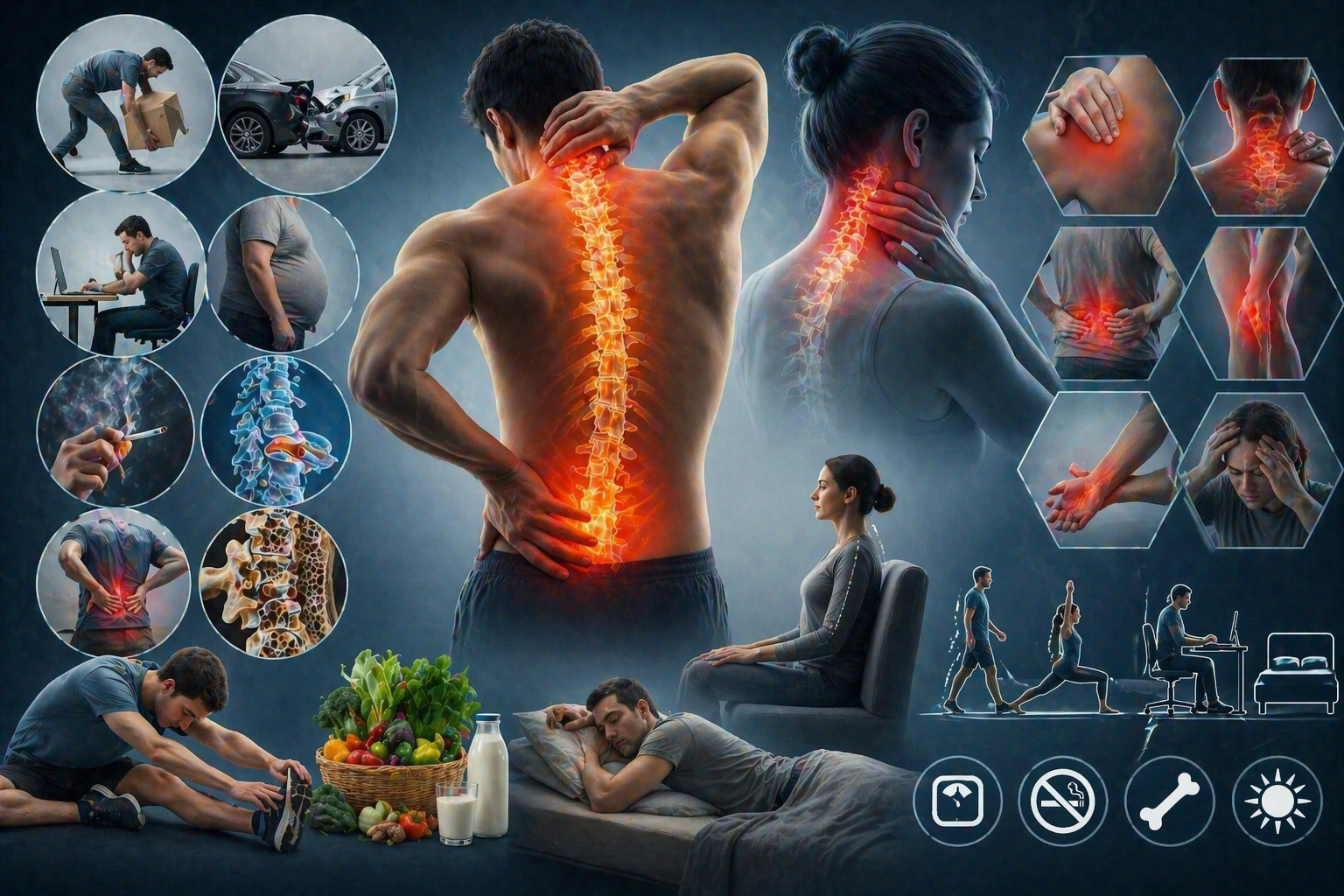
Identifying a single cause can be difficult, as multiple factors may contribute, including:- Overuse, repetitive movements, or heavy lifting
- Injuries, trauma, or fractures
- Age-related degeneration of spinal structures
- Infections
- Abnormal growths such as tumors or bone spurs
- Obesity and excess strain on the spine
- Poor muscle strength or posture
- Muscle tension, sprains, or ligament tears
- Joint disorders like arthritis
- Smoking
- Herniated or slipped discs and nerve compression
- Osteoporosis and compression fractures
- Congenital abnormalities
- Certain abdominal conditions
Symptoms
Back pain symptoms may include:- Dull, sharp, or burning pain
- Stiffness along the spine
- Pain radiating to the legs
- Numbness or tingling
- Persistent ache after prolonged sitting or standing
- Pain or stiffness in the neck
- Headaches
- Shoulder discomfort
- Tingling or numbness in the arms
- Loss of bladder or bowel control
- Weakness in both legs
- Severe or worsening pain
Diagnosis
Diagnosis typically involves:- Physical examination
- Imaging tests such as X-rays, MRI, or CT scans
- Blood tests in certain cases
Treatment Options
For acute pain:- Rest and gentle movement
- Over-the-counter pain relievers
- Hot or cold therapy
- Exercise and physiotherapy
- Anti-inflammatory medications or muscle relaxants
- Support braces
- Injections or nerve blocks
- Alternative therapies like acupuncture
Rehabilitation & Management
Rehabilitation programs focus on:- Improving mobility and flexibility
- Strengthening muscles
- Pain management
- Lifestyle and posture correction
- Stress management and counseling
Complications
- Reduced work productivity
- Nerve damage leading to pain or weakness
- Emotional stress or depression
- Weight gain due to reduced activity
Prevention
- Maintain proper posture
- Use correct lifting techniques
- Exercise regularly
- Avoid smoking
- Maintain a healthy weight
- Ensure adequate calcium and vitamin D intake
When to Seek Medical Help
Consult a healthcare provider if you experience:- Severe or persistent pain
- Pain after injury
- Numbness or weakness
- Fever or unexplained weight loss
- Difficulty with bladder or bowel control