

Joint Care
Variety Of Surgeries And Non-surgical Treatments For Fractures From Trauma
Overview
Overview
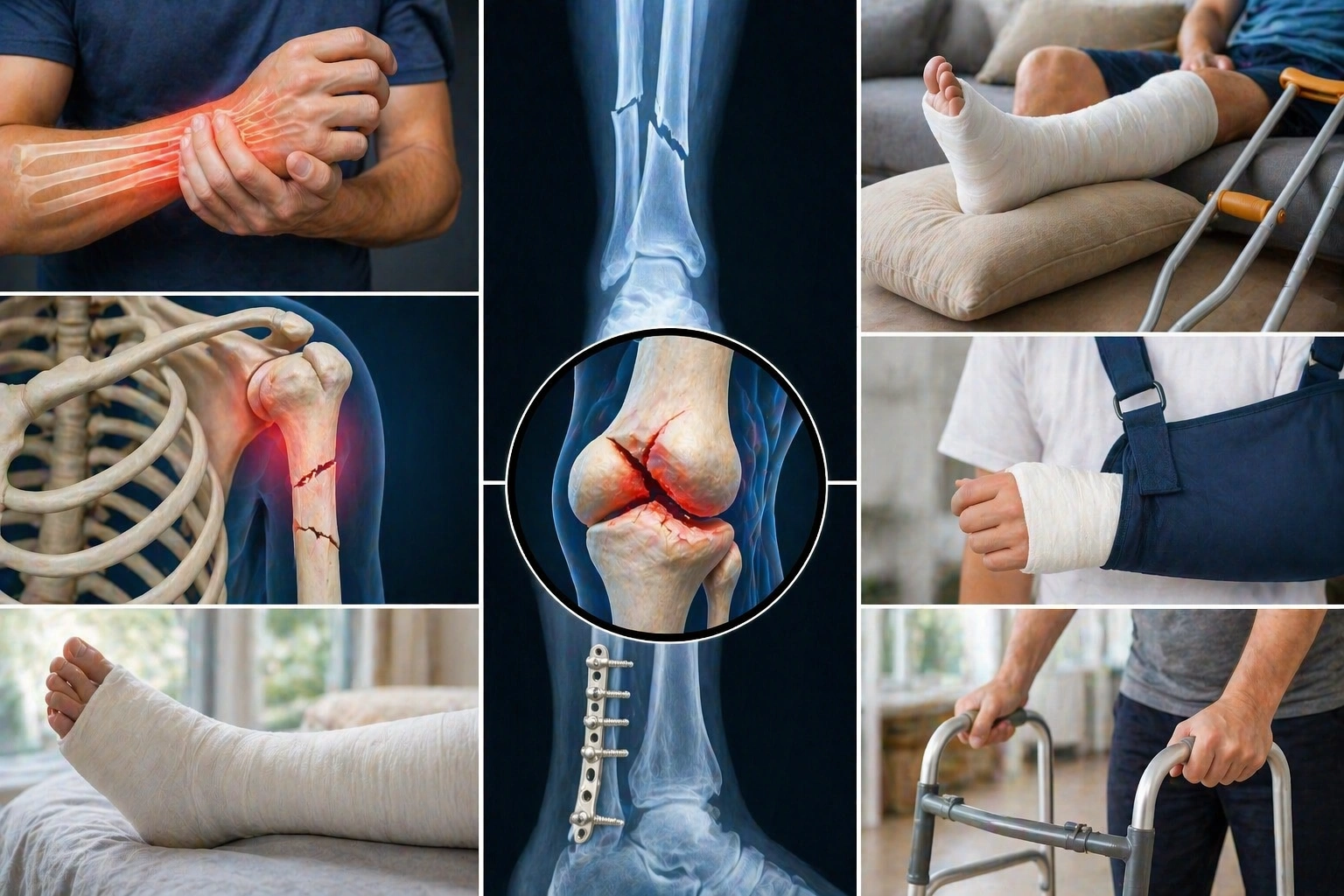
A bone fracture is the medical term used to describe a broken bone. It occurs when a bone is subjected to enough force to crack or break. Common causes include accidents, falls, or sports injuries, though certain medical conditions and repetitive stress can also increase the risk.In some cases, fractures may require surgical intervention, while others can heal with support such as a cast, splint, brace, or sling. Recovery time varies depending on the location, severity, and type of fracture.
Bone fractures and broken bones refer to the same condition. “Fracture” is simply the medical term used by healthcare professionals.
Bone Fracture vs Bone Bruise
Both injuries result from strong impact, but they differ in severity. A bone bruise occurs when the bone is damaged but not broken, causing internal bleeding within the bone. A fracture, on the other hand, means the bone has actually broken, making it a more serious injury that usually takes longer to heal.Bone Fracture vs Sprain
A fracture involves a broken bone, whereas a sprain affects ligaments, which are stretched or torn. In some injuries, both a fracture and a sprain can occur together, especially in joints like the knee or elbow.Types of Bone Fractures
Fractures are classified based on several factors:- Pattern: The shape or appearance of the break
- Cause: How the injury occurred
- Location: The specific bone affected
- Open fractures involve the bone breaking through the skin and carry a higher risk of infection
- Closed fractures do not break the skin but still require treatment
- Displaced fractures involve misalignment of bone pieces and often require surgery
- Non-displaced fractures remain aligned and may heal with immobilization
Who is at Risk?
Anyone can experience a fracture, but the risk increases with:- Trauma such as falls or accidents
- Sports injuries
- Weak bones due to osteoporosis
Symptoms of a Bone Fracture
- Severe pain
- Swelling
- Tenderness
- Difficulty moving the affected area
- Bruising or discoloration
- Visible deformity
Causes of Bone Fractures
- Falls
- Road accidents
- Sports injuries
- Repetitive stress (stress fractures)
- Overuse of certain body parts
Diagnosis
Doctors diagnose fractures through:- Physical examination
- Imaging tests such as X-rays, MRI, CT scans, or bone scans
Treatment Options
Immobilization:Mild fractures are treated using splints or casts to keep the bone in place during healing.
Closed Reduction:
A non-surgical method where the doctor realigns the bone manually before immobilization.
Surgery:
Required for severe fractures using techniques such as:
- Internal fixation (rods, plates, screws, wires)
- External fixation (support structure outside the body)
- Joint replacement (arthroplasty)
- Bone grafting for complex cases
Possible Complications
- Improper healing (malunion or nonunion)
- Infection (especially in open fractures)
- Nerve or blood vessel damage
- Compartment syndrome
- Joint or tissue damage
Recovery Time
Healing time depends on the fracture type and treatment:- Minor fractures: a few weeks
- Moderate fractures: a few months
- Severe fractures: up to a year or more
Prevention Tips
- Wear protective gear during sports
- Maintain a safe environment to prevent falls
- Follow a healthy diet for bone strength
- Use assistive devices if needed
- Get bone density tests if at risk
When to Seek Immediate Care
Visit the emergency room if you experience:- Severe pain
- Inability to move a body part
- Visible bone or deformity
- Swelling with bruising
- Signs of infection (fever, warmth, redness)