

Joint Care
Surgery for Bone Tumours
Overview
Overview
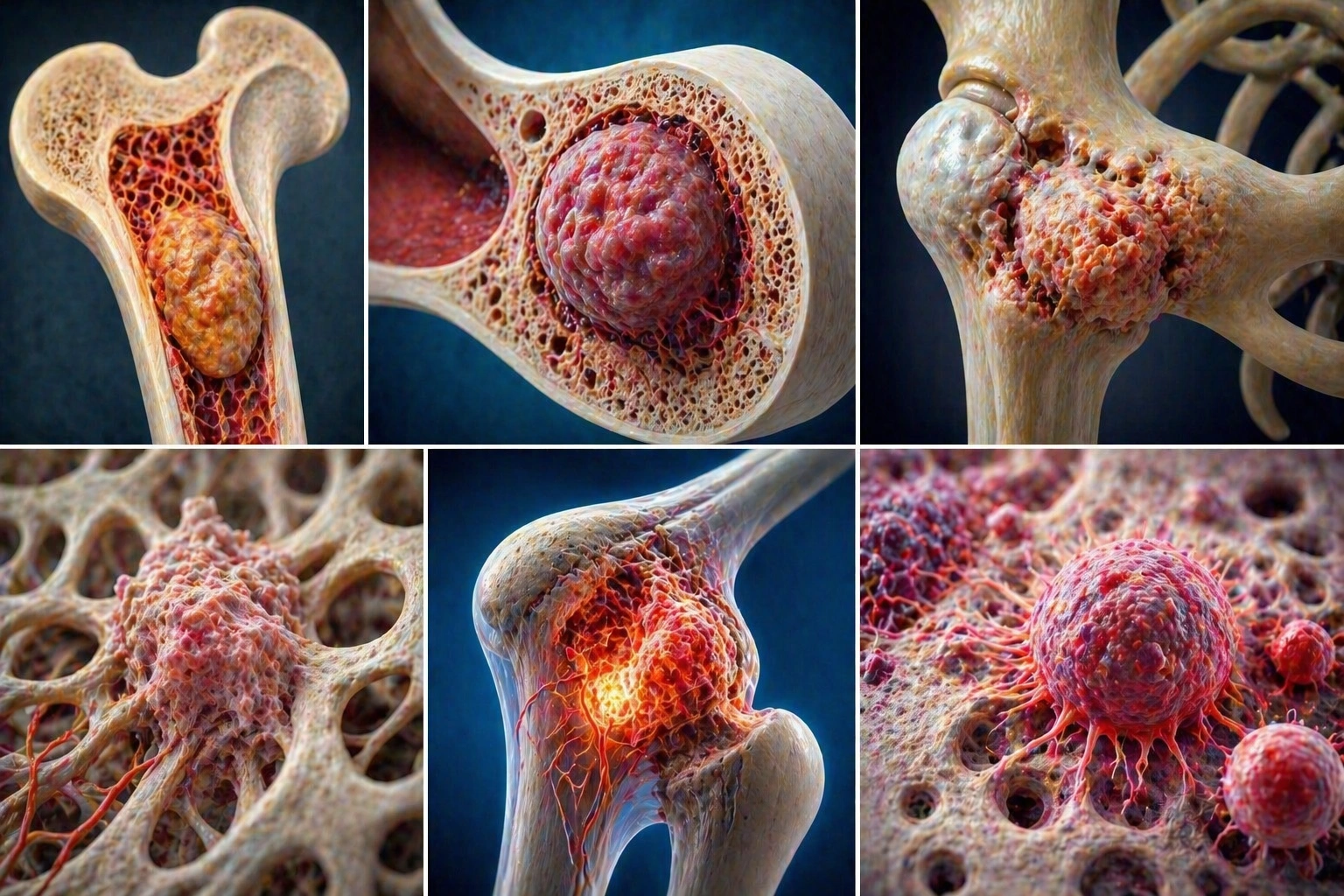
Bone tumors occur when cells within a bone grow abnormally and form a mass of tissue. These tumors can develop in any bone and may arise in different parts of the bone, including the outer surface or the inner marrow.Most bone tumors are benign (non-cancerous). These are generally not life-threatening and typically do not spread to other areas of the body. Depending on the type, they may only require monitoring or, in some cases, surgical removal.
However, some bone tumors are malignant (cancerous). These can spread to other parts of the body and usually require a combination of treatments such as chemotherapy, radiation therapy, and surgery.
Types of Bone Tumors
Bone tumors are broadly classified into:Primary Bone Cancer
These cancers originate directly in the bone.
Secondary (Metastatic) Bone Cancer
These begin in another part of the body and spread to the bones. Common cancers that spread to bone include:
- Breast
- Lung
- Thyroid
- Kidney
- Prostate
Common Primary Bone Cancers
- Multiple Myeloma: A cancer of bone marrow that can affect multiple bones
- Osteosarcoma: Common in children and teenagers, often near the knee
- Ewing’s Sarcoma: Typically affects younger individuals and occurs in long bones or pelvis
- Chondrosarcoma: Develops from cartilage cells, usually seen in adults
Benign Bone Tumors
Non-cancerous tumors and related conditions include:- Osteochondroma
- Giant cell tumor
- Enchondroma
- Fibrous dysplasia
- Bone cysts
Causes
In most cases, the exact cause of bone tumors is unknown. However, certain factors may contribute:- Genetic conditions
- Abnormal cell growth
- Underlying bone disorders
Symptoms
- Persistent or worsening pain (often dull and aching)
- Pain that increases at night or with activity
- Swelling or tenderness
- A noticeable lump or mass
- Fever or night sweats (in some cases)
Diagnosis
To confirm a bone tumor, doctors perform:- Medical history evaluation
- Physical examination
- Imaging tests such as X-rays, MRI, CT scans, or bone scans
Treatment Options
Non-Surgical Treatment- Monitoring (for benign tumors)
- Medications in certain cases
- Chemotherapy: Destroys cancer cells throughout the body
- Radiation therapy: Targets and shrinks tumors
- Surgery: Removes the tumor
- Tumor removal (excision)
- Limb salvage surgery (removing tumor while preserving limb function)
- Bone reconstruction using implants or grafts
- Amputation (in advanced cases)
Recovery & Follow-Up
Recovery depends on the tumor type and treatment method. After treatment:- Regular follow-ups are required
- Imaging tests ensure the tumor has not returned
- Rehabilitation may be needed to restore function