

Joint Care
Anesthesia
Overview
Overview
Orthopedic care involves both surgical and non-surgical approaches to treat conditions affecting bones, joints, muscles, and the spine. These include trauma, sports injuries, degenerative disorders, and congenital conditions.During orthopedic surgeries, anesthesia is used to prevent pain and ensure patient comfort. The choice of anesthesia depends on the type of procedure, the patient’s health condition, and discussions between the patient, surgeon, and anesthesiologist.
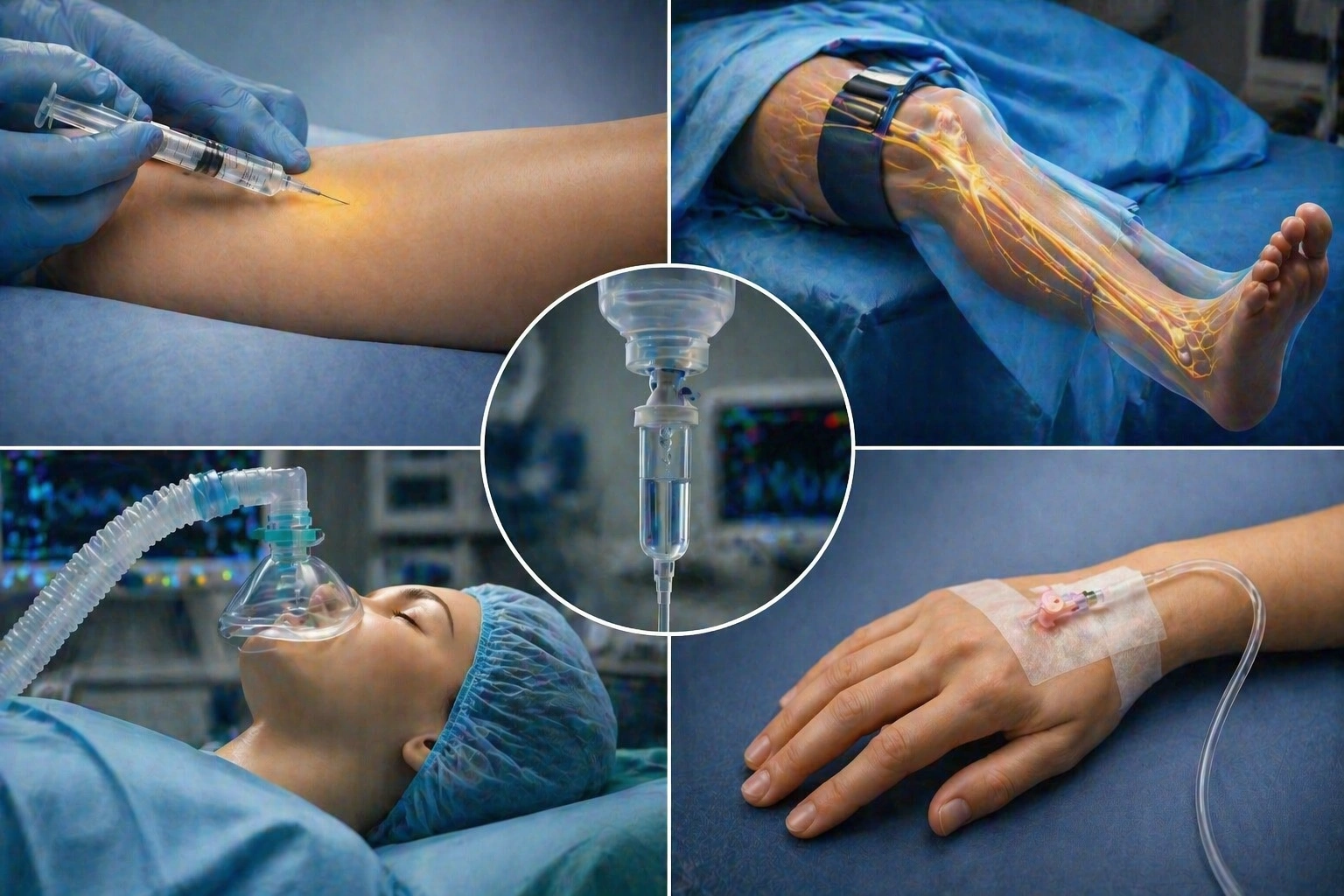
There are four primary types of anesthesia used in orthopedic procedures:
- Local Anesthesia: Numbs a small, specific area while the patient remains fully awake.
- Regional Anesthesia: Blocks sensation in a larger part of the body, such as an arm or leg.
- General Anesthesia: Puts the patient into a fully unconscious state.
- IV (Monitored) Sedation: Helps the patient feel relaxed and drowsy, with varying levels of awareness.
Types of Anesthesia
Local AnesthesiaThis is typically used for minor procedures. Medications such as lidocaine are used to numb a small area. Patients remain awake throughout the procedure. It is often used for simple treatments or in combination with sedation for better pain control.
General Anesthesia
General anesthesia is commonly used for major orthopedic surgeries. It induces a sleep-like state where the patient is completely unconscious and does not feel pain or respond to stimuli. It is administered using a combination of intravenous drugs and inhaled gases.
Regional Anesthesia
Regional anesthesia numbs a larger area of the body, such as the lower half or a limb. Common forms include spinal anesthesia and epidurals. Patients remain awake but do not feel pain in the targeted area. This method is widely used and considered safe for many procedures.
IV Sedation (Monitored Anesthesia Care)
This technique involves administering medications through an IV to help the patient relax. Depending on the level of sedation, patients may remain awake, lightly asleep, or deeply sedated while still breathing on their own. It is often used for less complex procedures where full anesthesia is not required.